You booked the truck, the freight reached the show, and then a separate charge appears for moving the same crates from receiving to the booth. That is usually material handling, often called drayage.
Drayage is not the truck ride to the show. It is the handling that happens after your freight reaches the advance warehouse or show site.
After decades in trade show freight, I can tell you that this gets much easier once you understand where transportation ends and material handling begins.
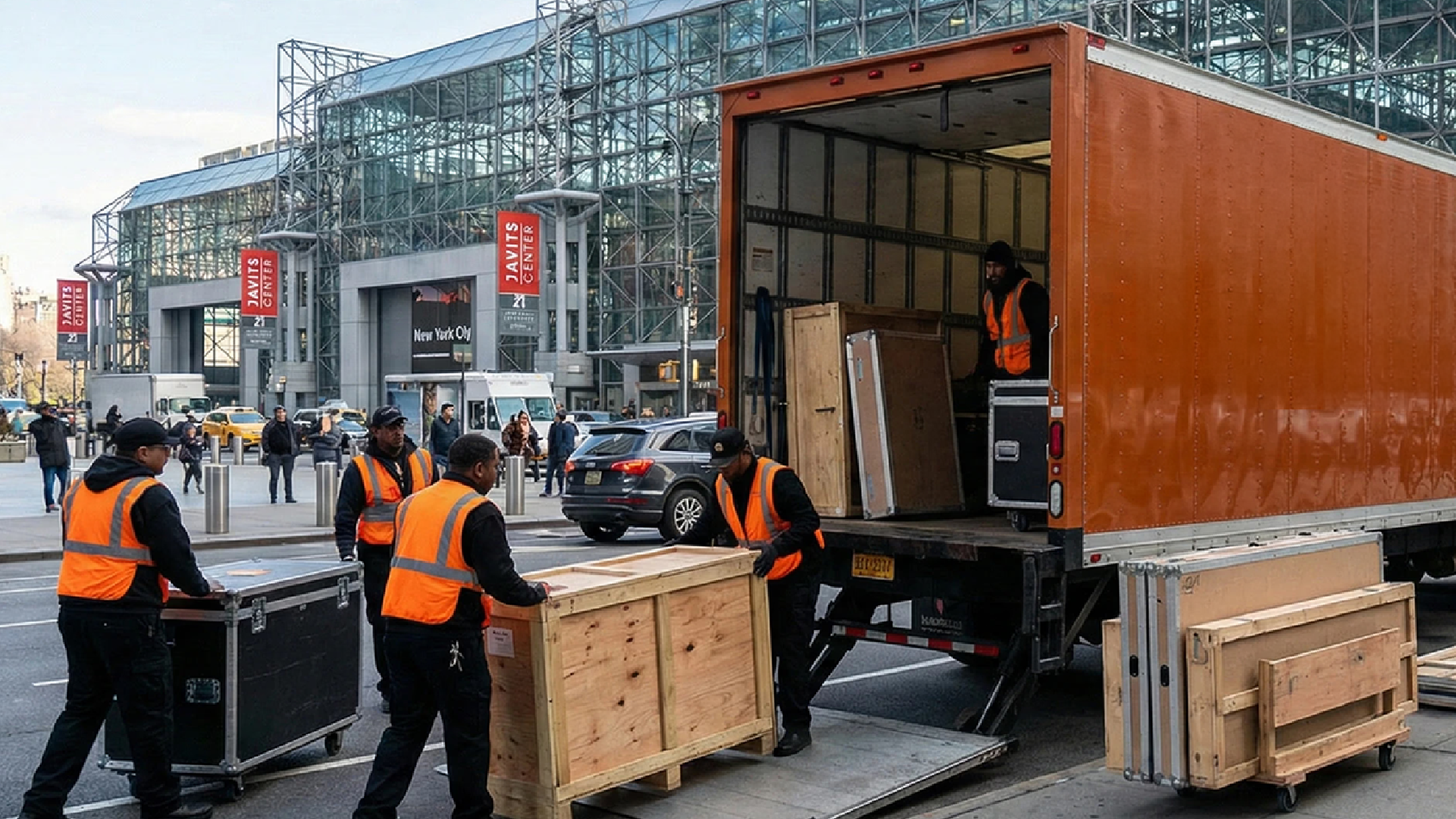
At a trade show, drayage and material handling generally refer to the movement and handling of exhibit freight once it reaches the show's receiving operation.
Drayage and material handling generally refer to the same part of the trade show process: moving freight from receiving to the exhibit space, removing and returning empty crates, and moving packed materials back to the dock for outbound loading.
Material handling begins when the official contractor receives freight at the advance warehouse or show site and continues through booth delivery, empty-container storage, and outbound loading.
The exact service package varies by show, but material handling commonly includes:
That is a lot more than a forklift trip across the hall. The charge supports the labor, equipment, storage, traffic control, and show-floor coordination required to move thousands of exhibitor shipments through the venue on a fixed schedule.
This is the distinction to remember.
Transportation is the movement from point A to the show destination. Drayage is the movement and handling inside the trade show receiving system.
If Exhibitway Logistics transports your booth from Chicago to Las Vegas, our transportation service gets the freight to the correct show destination and through the carrier-side delivery process.
Once the freight is accepted by the official material handling contractor, that contractor controls the unloading and movement to the booth.
That is why your freight invoice and your material handling invoice are separate.
The advance warehouse is still part of the show's material handling system.
When freight arrives there, the contractor receives it, stores it, and later transports it into the venue and to the assigned booth. That warehouse receiving and booth delivery are part of the material handling service.
If you ship direct to show, the contractor receives the freight at show site and moves it from the dock to the booth.
Either way, the freight usually enters the contractor's handling process.
Transportation costs to and from the event are separate from material handling, and material handling can apply whether freight is delivered to the advance warehouse or directly to show site.
There is no universal trade show drayage rate.
Pricing is published by the show's official contractor and can depend on factors such as:
Some shows use traditional weight-based pricing. Others use bundled or alternative pricing structures.
The key point is simple: use the rate sheet for your specific show. Do not use a previous event's invoice as your budget assumption.
CWT means "per hundredweight." In trade show material handling, a rate quoted per CWT is charged for each 100 pounds of billable shipment weight.
For example, if the published rate is $X per CWT, a 1,000-pound shipment represents 10 CWT before any minimums, special handling, overtime, or other show-specific rules are applied.
Many shows also have minimum charges per shipment. A light shipment may still be billed at the show's stated minimum.
Because rate structures vary, always calculate from the current exhibitor kit rather than relying on a generic formula.
Many shows require certified weight tickets for inbound freight.
The weight ticket documents the shipment weight used for material handling billing. Requirements vary, but exhibitors should confirm that the carrier has the correct documentation before dispatch.
Many shows require a certified weight ticket to accompany each individual shipment.
If your show requires one, treat it as part of the shipment paperwork, not as something to figure out after the driver arrives.
Packaging can affect more than damage protection.
Material handling contractors may classify freight differently depending on how it is packed and how it must be unloaded.
A standard crate that can be moved cleanly with a forklift is different from loose, mixed, stacked, fragile, or oddly shaped freight that requires additional labor or equipment.
That is one reason we encourage exhibitors to think about packaging as part of the logistics plan. Good packaging makes the freight easier to identify, protect, handle, and reload.
Once the booth is unpacked, empty crates and cases usually cannot remain in the booth or aisles.
The material handling contractor provides empty labels, removes the containers, stores them during the event, and returns them after show close.
The important part is timing.
At a large show, thousands of empty containers may need to come back to the floor. Your crates may not be the first ones returned after the show closes.
That is why move-out plans should include realistic time for empty return, repacking, paperwork, and carrier pickup.
Common cost drivers can include:
Not every show uses the same fees or definitions, so verify the current rate sheet before making assumptions.
The goal is not to avoid material handling. At many trade shows it is a required part of getting freight to the booth. The goal is to understand it well enough to plan for it.
Before you finalize the freight plan:
Then keep the transportation budget and material handling budget separate. It makes comparing options much easier.
A trade show freight partner should understand material handling even when it does not control the material handling invoice.
We use that knowledge to help customers choose between advance warehouse and direct-to-show shipping, build realistic delivery schedules, prepare carriers for marshalling and check-in, and avoid transportation decisions that create unnecessary problems downstream.
For more on choosing the right delivery method, see Advance Warehouse vs. Direct to Show.
Drayage makes more sense when you stop thinking of it as a second shipping charge and start thinking of it as the show's freight-handling system.
Your carrier gets the freight there. The material handling contractor gets it from receiving to the booth and back out again.
If you are reviewing an exhibitor kit and the material handling section is not making sense, send it our way. Exhibitway Logistics can help you read through the freight requirements and build a shipping plan around the actual show rules.