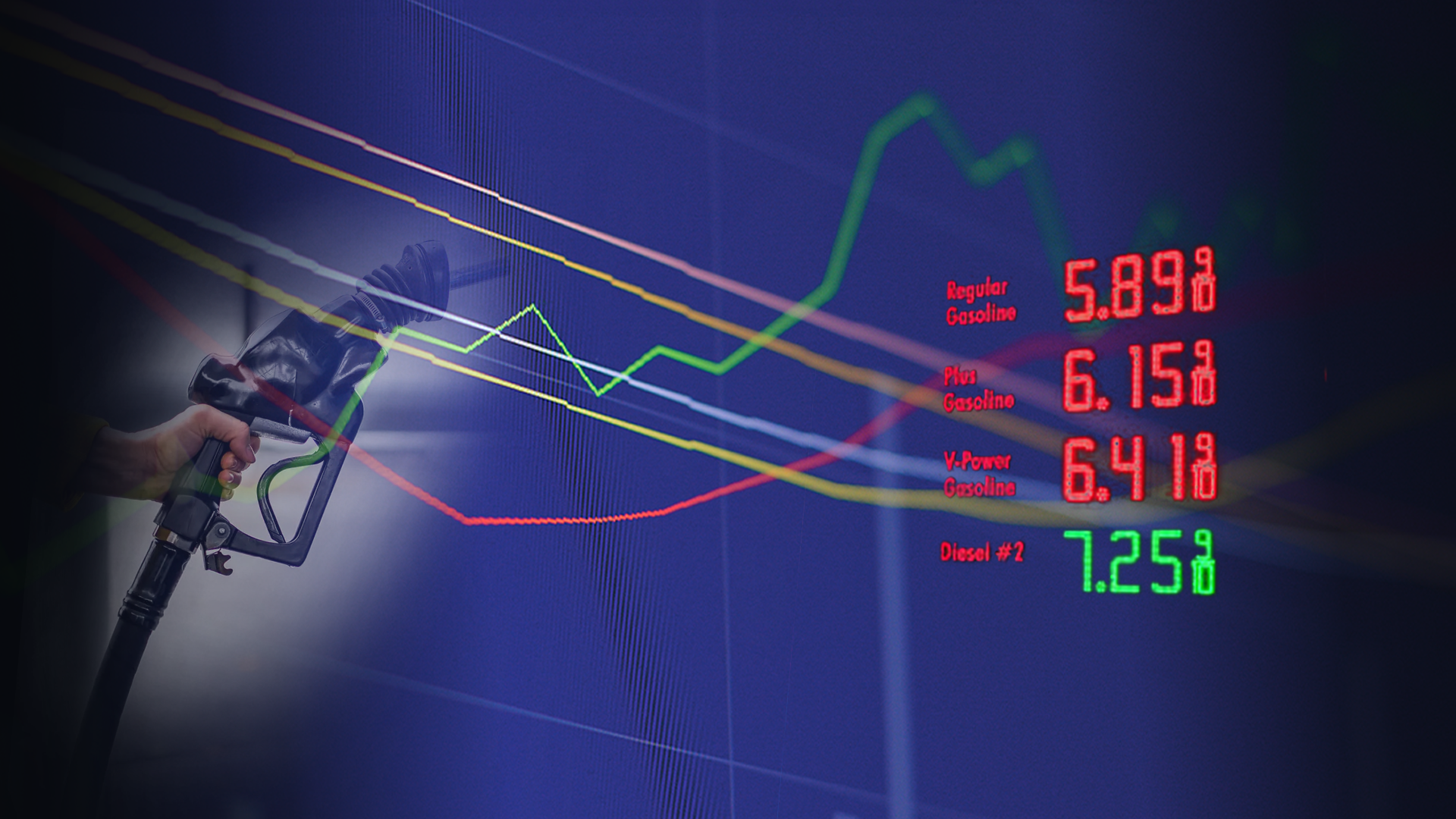
Fuel prices are getting attention again, and for good reason. When diesel prices move, transportation costs and fuel surcharges can move with them. But for exhibitors trying to control trade show shipping costs, fuel is only one part of the equation.
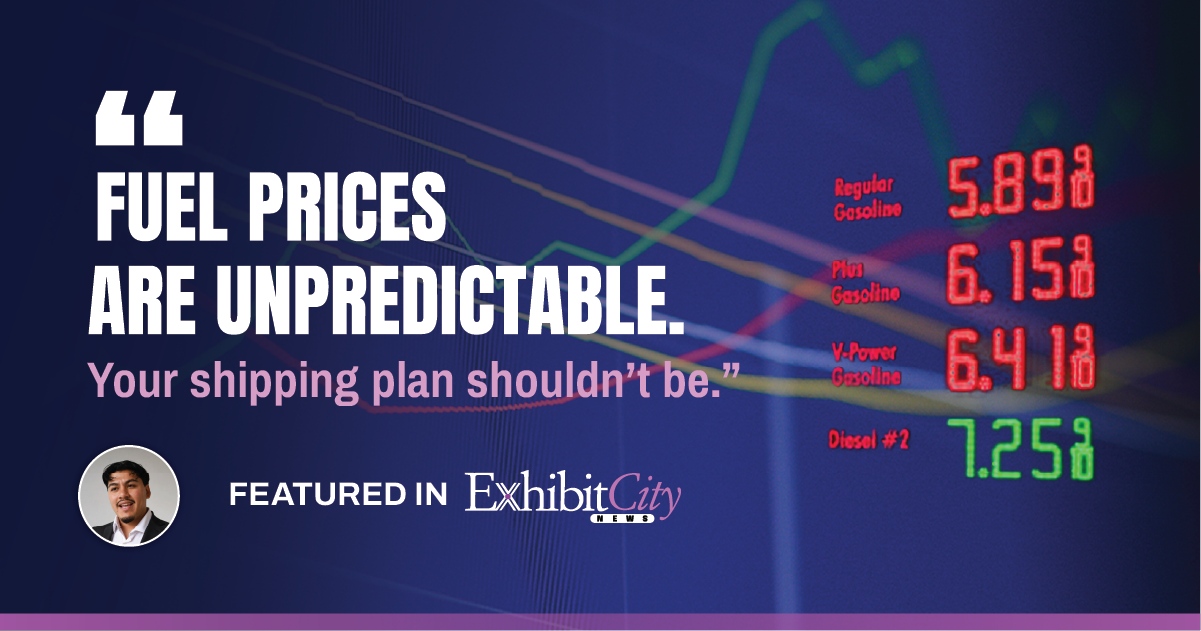
I recently spoke with Ray Smith of Exhibit City News about fuel-price volatility and what it means for trade show transportation. The conversation became part of his article, “Soaring Fuel Prices Stymie Tradeshow Shippers.”
One of the points I think is most important, though, goes beyond fuel.
After years of working in trade show logistics, I've learned that there will always be something we can't predict perfectly. Fuel prices change. Carrier capacity changes. Production schedules get pushed. Weather happens. A shipment that looked straightforward a month ago can suddenly have a very different set of options.
The goal isn't to predict every one of those variables.
It's to build a trade show shipping plan that gives you options when something changes.
Fuel is one of the most visible variables in transportation. When diesel prices increase, the fuel surcharge attached to a shipment can change as well.
But when we're evaluating trade show shipping costs, we're looking at much more than the fuel surcharge or line-haul rate.
Pickup and delivery dates, transit time, carrier availability, shipment size, routing, service level, advance warehouse deadlines, direct-to-show schedules, marshaling procedures, wait time, detention, target move-in dates, and last-minute expedited transportation can all affect what a shipment ultimately costs.
That's why I don't think the right question is simply, "What's the cheapest freight rate?"
A lower rate on one part of the shipment can create a much larger expense somewhere else if the transportation plan doesn't account for the realities of the show.
The better question is:
What's the most cost-effective way to get this freight where it needs to be, when it needs to be there, with an acceptable level of risk?
That's the way we approach trade show transportation at Exhibitway.
If there's one thing I consistently recommend, it's getting transportation involved earlier.
More lead time means more options.
Depending on the shipment, we may be able to evaluate different carriers, routes, transit schedules, pickup dates, service levels, and delivery strategies before anything has to move.
As the show gets closer, those options start disappearing.
A shipment that could have moved on a standard transit schedule may suddenly require expedited trade show shipping. A preferred carrier may no longer have capacity. Missing an advance warehouse deadline can change the delivery strategy entirely.
Planning early doesn't guarantee that transportation conditions won't change. It means we have more room to adjust when they do.
That's especially important for exhibit houses managing freight for multiple clients and multiple shows. Production schedules shift. Shows overlap. Freight may need to move from one event directly to another.
The sooner transportation becomes part of the conversation, the more options there are to work with—and the less likely you are to be making expensive decisions at the last minute.
There isn't one carrier, route, or service level that's automatically right for every trade show shipment.
We look at what the freight actually needs to accomplish.
Where is it coming from? When will it be ready? When does it need to arrive? How much flexibility is in the schedule? Is there an advance warehouse option? Is there a target move-in? Where does the freight need to go after the show?
Those details can change the transportation strategy.
Sometimes cost is the biggest consideration. Sometimes protecting a delivery window matters more. In other cases, changing the pickup date, carrier, routing, or service level creates an option that wasn't obvious at first.
This becomes particularly important when market conditions are moving.
If capacity tightens on a lane, fuel costs change significantly, or the production schedule moves, having another viable option is much better than discovering at the last minute that the original plan is the only plan.
This is one of the most important lessons in trade show shipping:
The lowest transportation quote isn't necessarily the lowest-cost shipping plan.
Trade shows have downstream costs, deadlines, and delivery requirements that don't always exist with ordinary freight.
Take the decision between advance warehouse and direct-to-show shipping.
The freight rate is only one piece of that decision. You also need to consider the delivery schedule, material handling, marshaling, target move-in times, potential wait time, and what happens if the freight doesn't arrive when expected.
Saving a few hundred dollars on transportation doesn't look like much of a savings if the shipment then requires expedited service, incurs detention, misses a delivery window, or leaves an installation crew waiting for critical exhibit materials.
That doesn't mean the more expensive freight option is automatically better, either.
It means the transportation decision needs to be made in the context of the entire show.
When we compare options, we're trying to balance cost, timing, and service rather than optimize one while ignoring the other two.
That's an important distinction when evaluating the true cost of exhibit shipping.
Another thing I've learned is that bad news rarely gets better by waiting to share it.
If costs are changing, capacity is tightening, a route needs to change, or a schedule is becoming difficult, customers should know while there is still time to do something about it.
That's when you can have a productive conversation.
Once a shipment is already late, the number of good answers gets much smaller.
For us, communication isn't just about sending tracking updates once a truck is on the road. It's about identifying potential problems early enough that the customer can understand the options and make an informed decision.
Nobody can tell you with certainty what diesel will cost months from now.
We also can't guarantee what carrier capacity, weather, traffic, or every other transportation condition will look like on the day your freight moves.
Fortunately, we don't need to.
What we can do is identify the parts of the shipment that matter most.
A good trade show logistics plan doesn't need a backup plan for every imaginable scenario.
It needs to identify where the biggest risks are and what options are available if something changes.
That's particularly important with show-to-show shipping. When freight is leaving one event and heading directly to another, there may be very little time in the schedule to absorb a delay.
In those situations, contingency planning can't start after something goes wrong. It needs to be part of the transportation strategy from the beginning.
When Ray and I discussed fuel prices for Exhibit City News, one of the things I told him was:
“At the end of the day, the biggest savings usually come from planning, not cutting corners.”
That's really the larger point.
Fuel prices will change. Transportation markets will change. Shows will have different requirements, and occasionally something will happen that none of us expected.
We can't control all of that.
What we can control is how early we start, how well we understand the shipment, how many viable options we have, and how quickly we communicate when circumstances change.
Managing trade show shipping costs isn't just about finding the lowest rate. It's about avoiding situations where limited options, missed deadlines, or last-minute decisions create costs that could have been prevented.
The goal isn't to build a plan that assumes everything will go perfectly.
It's to build one that can still work when it doesn't.
For more perspective on fuel prices and their impact on trade show transportation, read Ray Smith's “Soaring Fuel Prices Stymie Tradeshow Shippers” in Exhibit City News, featuring my perspective on how we're approaching changing transportation conditions at Exhibitway.
Read the full article in Exhibit City News →
If you're preparing for an upcoming show, getting the transportation conversation started earlier can give you more options to work with—and more room to respond when conditions change.
Whether you're moving a single exhibit, coordinating freight for multiple clients, or planning a schedule of shows, Exhibitway can help you build a shipping plan around your deadlines, freight, and show requirements.